
Rubber Dams for Canal Networks
Inside a canal system the dam is not a barrier — it is a control element that sets a level, and does it the same way every time.
Why a Rubber Dam Fits This Duty
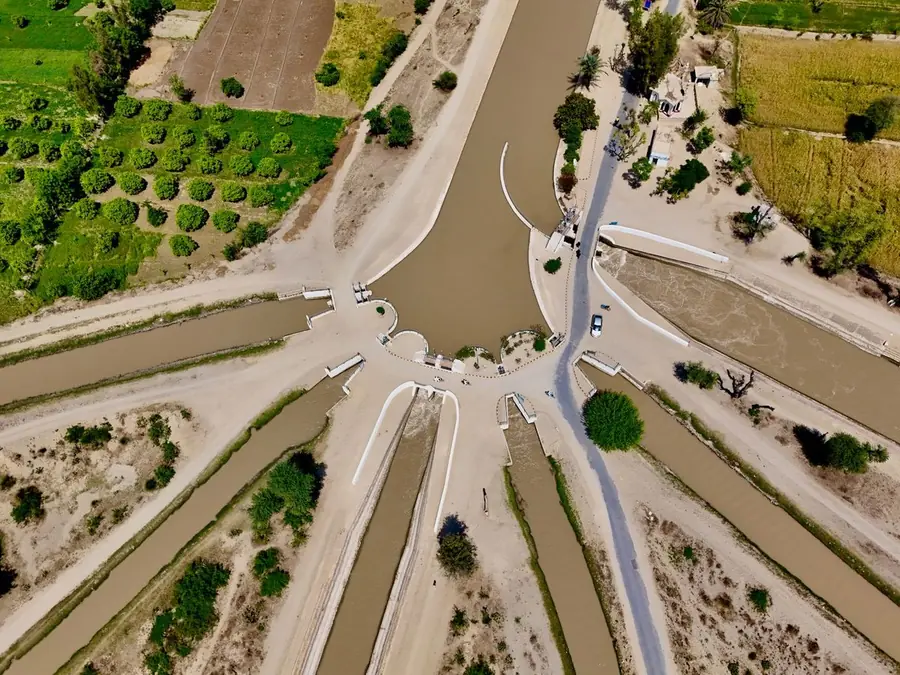
A canal network is a chain of level decisions: how much enters at the head, how it is split between laterals, and how the level is held along the route. Each of those decisions is normally a gate, and every gate is something to operate, maintain and get wrong.
A rubber dam replaces that gate with a crest height. Set the inflation, and the diversion level is fixed; the same setting reproduces the same flow, which is what a distribution plan depends on.
Because the bag can be dropped flat, the canal can also be flushed and desilted without dismantling anything, and a flood entering the system can be passed instead of overtopping the banks.
How It Works in Practice
Canal head control
At the off-take the bag sets a precise diversion level, raised to top up the canal and lowered to pass silt or flood.
Distribution between laterals
A bay per lateral lets the operator trim each branch independently, following the command rather than a fixed proportion.
Regulation along the route
Mid-system, the bag holds a stable upstream level so downstream reaches are not exposed to every fluctuation at the head.
Flushing and maintenance
Full deflation drops the canal to the sill for cleaning, without a temporary earth dam.
Choosing the Configuration
Canal regulators are usually short spans with a modest head, so the choice between water and air inflation turns on how often the setting changes: frequent change favours air, a seasonal setting favours water.
The design inputs are the canal bed width, the command level required, and the silt carried by the source river. A silt-heavy canal needs a foundation and an operating plan that allow a regular flush.
Common Questions
Yes. Each bay can be set independently, so one lateral can be favoured over another without changing the head at the intake.
The crest height is a function of inflation. Once the level for a given command is established, the same setting reproduces it; the control system can store those set-points.
Related Pages
- All Applications — See all eight application areas.
- Rubber Dam Engineering — Bag height classes and anchoring options.
- Selection FAQ — Height, span and filling medium questions.
Tell Us About the Site
Send the river width, the level you need to hold and the flow you must pass — our engineers will come back with a proposed configuration.