
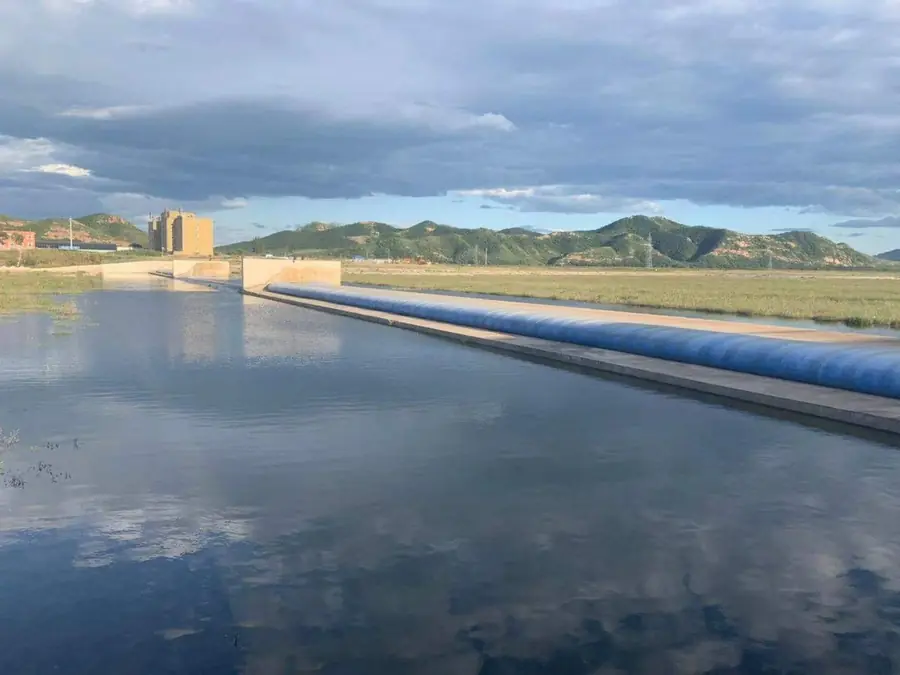
Rubber Dam Rehabilitation
A rubber dam is a wearing component on a permanent foundation. When the bag reaches the end of its working life, the structure around it is usually still sound — which is why replacement is often the cheapest capacity you will ever add.
Why a Rubber Dam Fits This Duty
Dams built in the 1990s and 2000s are now reaching the point where the bag, not the concrete, is the limiting element. Cracking, abrasion, anchor-zone leakage and a crest that no longer holds its level are the usual symptoms.
Replacing the bag restores the original duty and can improve it: a modern fabric build, a revised anchorage detail, or a control system that removes the manual operation the original scheme depended on.
The assessment comes first. What is replaced, and how far the work extends into the foundation or the control system, follows from an inspection of the actual condition rather than from the age of the dam.
How It Works in Practice
Condition assessment
The bag, the anchorage, the sill and the control equipment are inspected to establish what is worn, what is leaking and what can be reused.
Scope and options
The output is a short set of options: bag replacement only, bag plus anchorage retrofit, or a wider upgrade that includes the control system and the crest level.
Removal and preparation
The existing bag is deflated, released from the anchorage and removed; the sill and anchor zone are cleaned and checked before anything new is fixed.
New bag and anchoring
The replacement bag is installed to the current detail, with the anchorage brought up to the standard the new bag requires.
Testing and recommissioning
Inflation, deflation and control logic are tested across the full range, and the operating team is briefed on what has changed.
Choosing the Configuration
The practical constraint is almost always water: whether the reach can be isolated, and for how long. That decides whether the work is done in a single window or staged bay by bay.
If the original drawings are available, send them with photographs of the current condition. They shorten the assessment and usually widen the options.
Common Questions
In most cases yes — the foundation is the permanent element. Where the anchorage itself is degraded, it is refurbished as part of the same works.
It can be reviewed as part of the scope. Raising or lowering the retained level changes loads on the foundation, so it is assessed rather than assumed.
Related Pages
- Rubber Dam Engineering — Bag build and anchoring families.
- Installation — How a new dam is installed.
- Request an Assessment — Send photos and drawings.
Tell Us About the Site
Send the river width, the level you need to hold and the flow you must pass — our engineers will come back with a proposed configuration.