
Rubber Dams for Flood Control
A flood-control dam has to be two things at once: absent when the river is high, and present when it is low. A rubber bag is the simplest structure that can be both.
Why a Rubber Dam Fits This Duty
A fixed crest is a permanent obstruction. During a flood it pushes the water level up behind it, and that backwater is what reaches the streets upstream. A deflated rubber bag lies on the sill, so the channel returns to very nearly its natural discharge capacity.
The value is not only in the peak. Between floods the same structure holds a pool that keeps intakes submerged, maintains amenity water and supports the ecological base flow — duties that would otherwise need a separate weir.
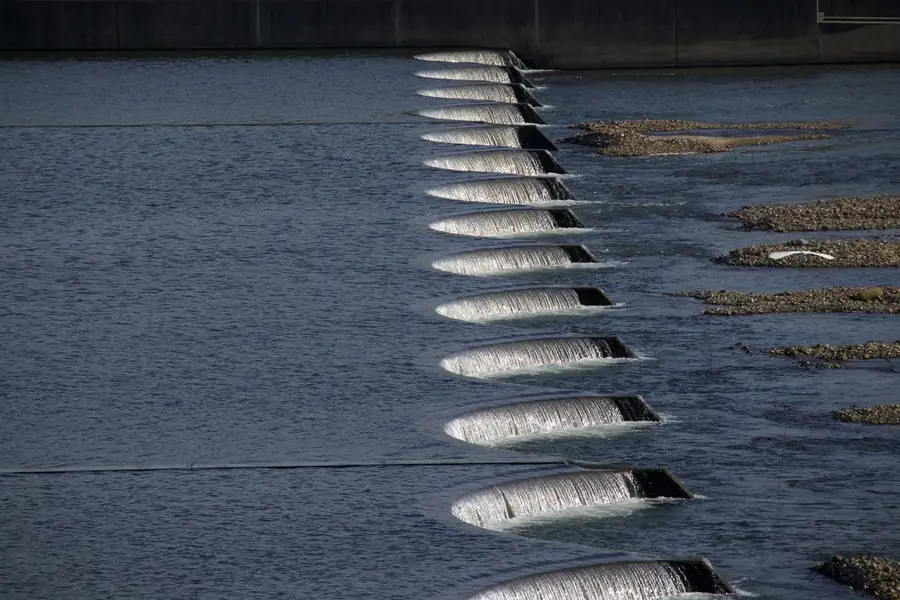
Because the dam is built in bays, it can be dropped progressively rather than all at once. Operators can open the section that carries the most flow first, and keep the rest holding until the forecast justifies a full collapse.
How It Works in Practice
Progressive collapse
Bays deflate in sequence, so the release is controlled instead of instantaneous. This avoids a surge downstream and lets the operator watch the level response between steps.
Full-section opening
With every bay flat, the obstruction is the bag thickness on the sill, not a wall. Flood peaks pass with minimal afflux.
Refill after the peak
Inflation begins as soon as the peak has passed, so the pool and the upstream intakes are restored within hours rather than waiting for a manual rebuild.
Failure modes are visible
A deflated bag is an inert sheet of rubber on the foundation. There is no gate leaf to jam, no machinery in the water, and inspection after a flood is a walk along the sill.
Choosing the Configuration
Flood duty rewards speed and reliability of deflation more than it rewards crest precision. Air-inflated systems and air shield dams deflate quickly; water-inflated bags are slower but simpler over very long spans.
The sizing question is the flood discharge the reach must pass with the dam flat. That number, together with the bed profile, decides how much of the channel the foundation may occupy.
Common Questions
Deflation can be released manually, and the control design includes a backup supply. A deflated bag is the safe state, so the system is arranged to fail towards open.
It depends on the filling medium and the bay size; air systems are the fastest. The exact figure is set at design stage from the flood warning time available on the river.
Related Pages
- Air Shield Dam — Pneumatic operation built for fast level change.
- Rubber Dam Bags — How the bag and anchorage are built.
- Project References — Dams on flood-prone and urban river reaches.
Tell Us About the Site
Send the river width, the level you need to hold and the flow you must pass — our engineers will come back with a proposed configuration.