
Ask “how long does a rubber dam last?” and the honest answer is: it depends on the compound, the river and the maintenance — in that order. A dam bag is an elastomer component living outdoors, permanently wet, sometimes overflowing, occasionally abused. Rather than quote a comfortable number, this article sets out exactly what determines service life, and how each factor is engineered and checked.
The baseline: what the compound must guarantee
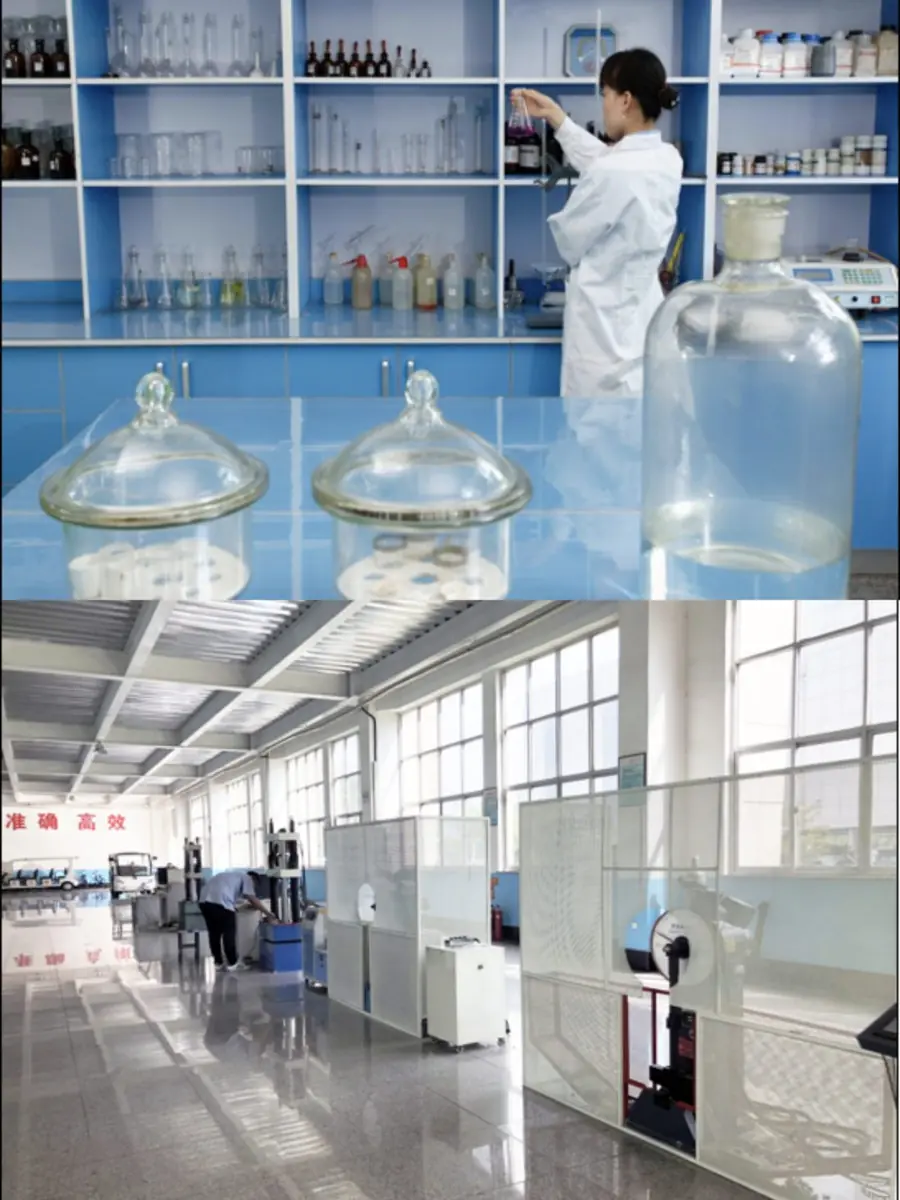
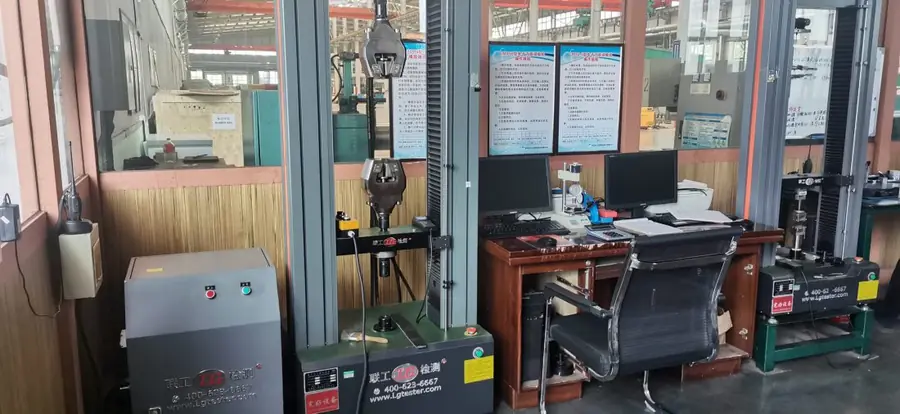
Every Baoli bag is built on a vulcanized rubber-fabric laminate whose physical properties are verified at the factory. These are the properties that decide how long a bag lasts:
We send the factory test values for the bag compound — tensile strength, elongation at break, tear, abrasion, ozone, low-temperature and ageing — with the quotation.
The five degradation drivers — and the countermeasures
1. Sunlight and ozone
Ultraviolet exposure and ground-level ozone attack the exposed crest, especially where the rubber is stretched. The countermeasure is chemistry, not thickness: an outer layer compounded for wear, sunlight, ozone and ageing resistance, verified by the ozone-ageing test above (10,000 pphm at 40 °C under 20 % stretch — deliberately harsher than most atmospheres).
2. Abrasion from sediment and debris
Rivers carry sand, gravel and occasionally large debris across the crest. The outer compound’s abrasion resistance carries the everyday load; good operating practice — avoiding chronic partial deflation into the abrasion zone and flushing sediment upstream — carries the rest.
3. Vibration and flutter
A bag spilling water can vibrate like a drum skin. Water-filled designs resist this with the mass of the inflation medium and a profile tuned for stable overflow; the anchoring line keeps the bag geometry where the designer put it. Chronic flutter is a maintenance signal, not a normal condition.
4. Accidental damage and vandalism
Punctures happen — and they are repairable. Small cuts are patched; larger damage is repaired by on-site vulcanizing. The bag is a replaceable component by design: this is one of the rubber dam’s quiet advantages over structures where damage means rebuilding concrete.
5. Chemical exposure
Industrial and agricultural runoff ages rubber faster than clean water. Where water quality is poor, the compound specification and inspection intervals are adjusted at the design stage — another reason to tell us the upstream situation early.
The manufacturing factor: pressure decides bonding
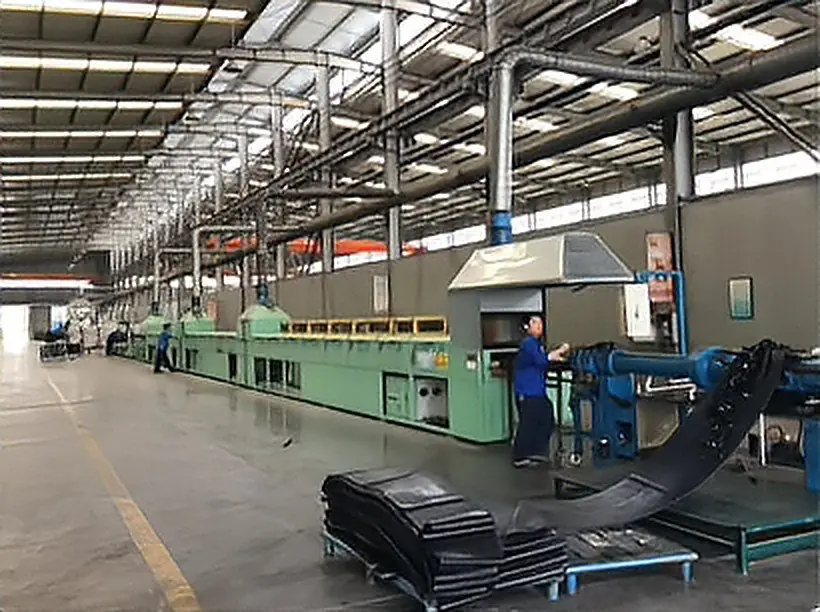
Two bags with the same laminate can age completely differently, because the failure mode that matters most — delamination between rubber and fabric — is decided on the factory floor. Vulcanizing at up to 4 MPa raises bag density and the bonding strength between rubber and canvas layers, reliably avoiding delamination in long-term operation. Equipment that vulcanizes at low general pressure leaves weaker inter-layer bonding, and the bag pays for it years later. When comparing suppliers, this is the question to ask.
The maintenance half of the bargain
A dam bag is not maintenance-free; it is maintenance-light. Reaching the compound’s full potential takes a short, repeatable routine:
- Inspect the crest and anchor line after each flood season — cuts, abrasion patterns, plate fasteners.
- Keep debris off the crest; remove accumulated logs and ice before re-inflation.
- Monitor pressure through the control system — a slow loss signals a seam or patch to check.
- Cycle the bag regularly even outside flood season; elastomers and clamped joints both prefer movement to stagnation.
- Repair early — a small patched cut never becomes a large one.
What we put in writing
Full material test reports and drawings are available on request for every project. The bag’s specification is not a brochure claim — it is a set of test certificates your design institute can check line by line.
Want the test reports, not just the claims?
Ask for the material certificate set with your quotation — tear, tensile, ageing and ozone results for the exact compound proposed for your project.