
A rubber dam bag is soft; the river is not. Everything the water pushes on — the full hydrostatic load, the internal pressure, the vibration of overflow — ends up at one line: the anchorage. At 6.0 m of retaining height the vertical pull on that line reaches 117 t/m. The anchoring system you choose determines whether the installation stays watertight and dimensionally stable for decades.
System 1: clamp-plate anchoring (the industry standard)
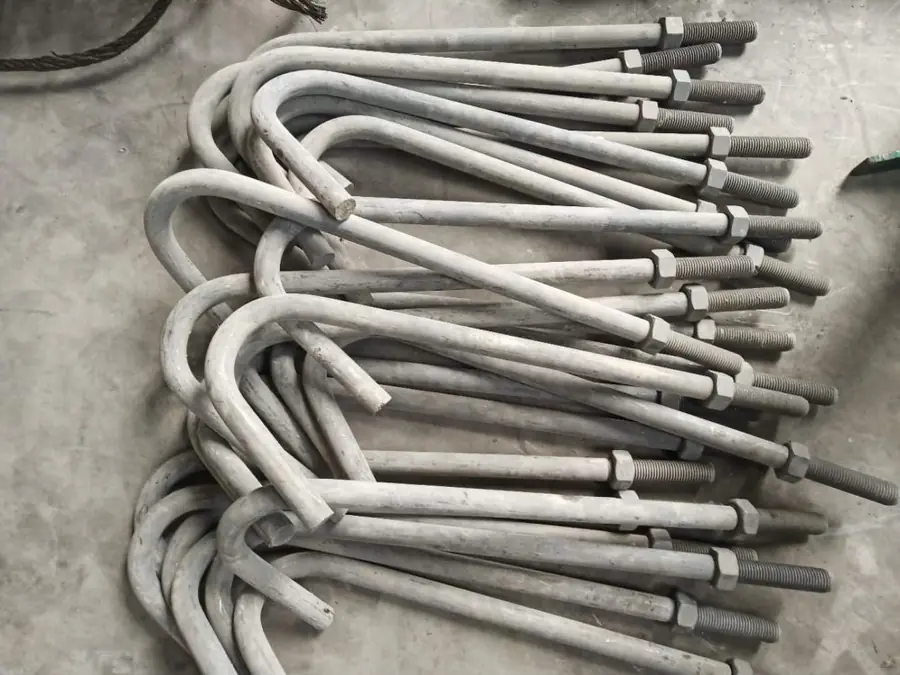
The most common fixing for medium and high dams is the double clamp-plate line: the bag is wrapped over a sealing pad and clamped between an upper and a lower steel plate, pulled down by a row of pre-tensioned anchor bolts cast into the sill. The upper plate carries the seal against water pressure; the lower plate fixes the bag’s downstream foot.
The specification scales with dam height — bigger bolts, thicker plates, more steel.
We send the anchoring schedule for your dam height — plate sizes, bolt grade and spacing — with the quotation.
Plate thickness, bolt diameter and spacing step up together with the pull force the bag has to resist — across the standard range the upper plate alone grows from 14 mm to 22 mm, and every embedded part is hot-dip galvanised as standard.
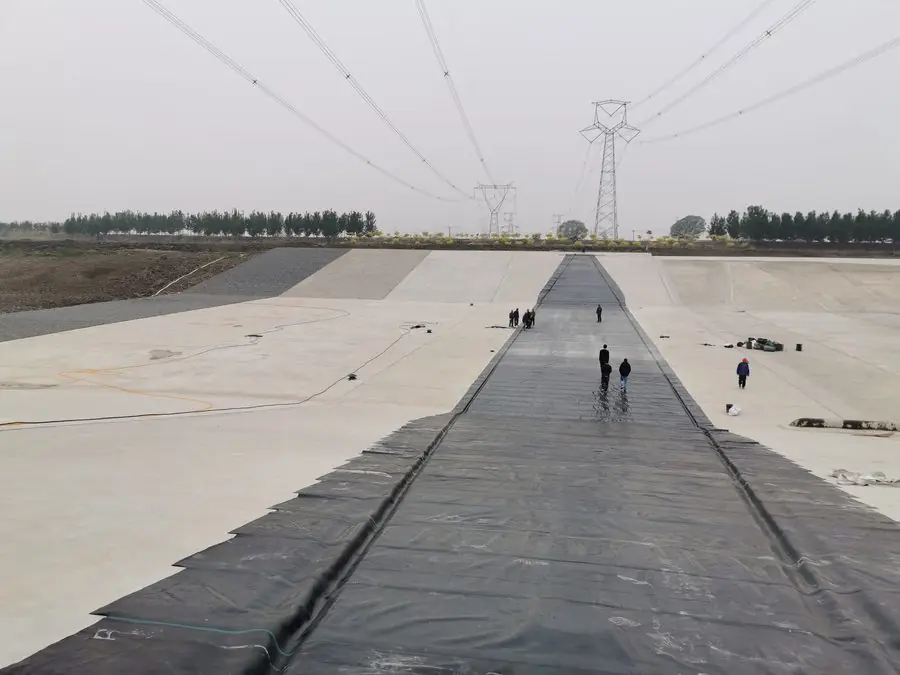
System 2: concrete wedge (tenon) anchoring
The second family fixes the bag with wedge strips seated into a dovetail groove formed in the concrete (or fitted as machined tenon sections). The wedge profile converts the pull force into a lateral clamp that tightens as the load rises — there are no through-bolts to torque, and the visible hardware is minimal. It is a common choice where the sill is new construction and the groove can be cast accurately, and it keeps the crest line clean.
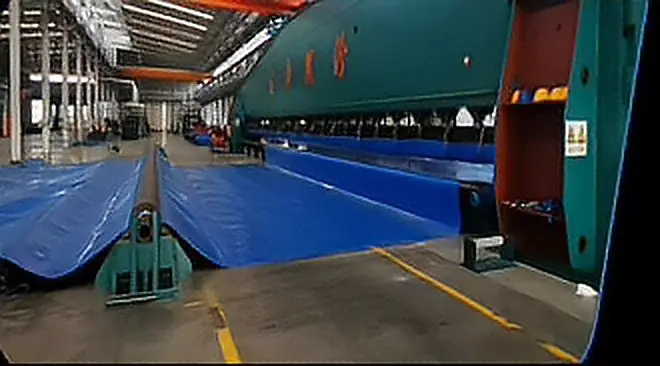
The trade-offs are practical rather than structural: the groove must be cast or cut to tight tolerance, and re-tensioning a clamp-plate line is simpler than re-seating a wedge system. Baoli manufactures and machines wedge sections in-house — the same dovetail profile, checked against the bag’s design pull force.
What the anchorage actually has to hold
The forces are not exotic — they are just large. From our hydraulic design matrix for water-filled bags:
The bag’s developed (real) length per metre of dam axis grows from about 4 m at 1.0 m height to about 26 m at 6.0 m — more bag on the sill, a longer anchoring geometry, and bolt lengths that step from 0.80 m to 1.20 m in the 5 m class. The anchorage layout is therefore designed together with the bag, not after it.
Corrosion protection and installation quality
- Hot-dip galvanizing is the standard for plates and bolts across the range; the 6.0 m class offers galvanizing or powder coating depending on water chemistry.
- The sill does the quiet work. Plates are only as flat as the concrete under them; grouting tolerances and bolt projecting heights are checked before the bag ever arrives on site.
- Sealing is a gasket problem, not a force problem. The clamp line must compress the sealing pad uniformly along its full length — a smooth sill and even bolt tension matter more than raw bolt size.
Clamp plate or wedge — the short answer
Clamp-plate with galvanized bolts is the default: inspectable, re-tensionable, and fully tabulated from 1.0 m to 6.0 m. Wedge anchoring suits new-cast sills where a clean crest line and fewer visible fasteners are wanted. Above 6.0 m, both the bag and the anchorage move into custom engineering — bring us in at the sketch stage.
Anchoring drawings come with the bag
Every Baoli quotation includes the anchoring layout, plate and bolt schedule and installation drawings. Detailed drawings and test reports are available on request for your design institute.