
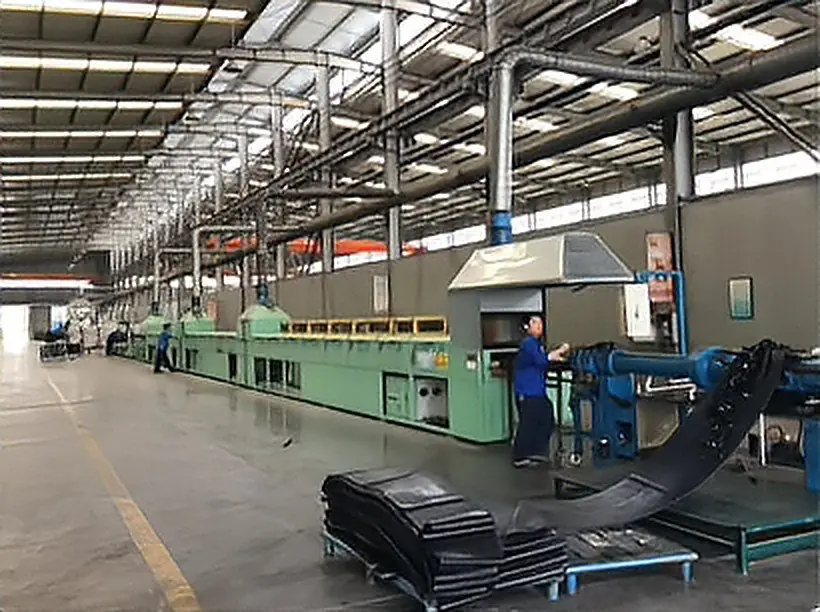
Ask for a “thicker bag” and you will get one — but thickness alone is not what keeps a dam bag alive for decades. What matters is the strength class of the canvas, the number of plies, and how the whole sandwich matches the water head. This article walks through the selection logic behind our JBD series, from a 1.0 m landscape weir to a 6.0 m river dam.
Inside the sandwich: canvas does the work, rubber protects it
A dam bag is a laminate. Dipped canvas plies (F) carry the tensile load; rubber layers (R) bond, seal and protect them. Each layer has a job:
- Outer rubber layer — takes the abuse: wear from debris and sediment, sunlight, ozone and general ageing.
- Middle rubber layer — bonds and protects the canvas plies, keeping delamination out of the picture.
- Inner rubber layer — airtight and watertight, and the first line of defence against canvas ageing from inside the bag.
When we talk about a “2-ply” bag we mean 2 canvas plies + 3 rubber layers (2F+3R); a “3-ply” bag is 3F+4R. Bags above 4.5 m move up to the 3-ply structure to carry the higher internal pressure.
The selection ladder: dam height decides the model
Our standard series covers 1.0–6.0 m in eleven pre-engineered steps. As the water head rises, two things happen at once: the canvas grade moves up (J1010 → J3636) and the ply structure steps from 2-ply to 3-ply at the 4.5 m class.
We send the model ladder for your height range — every JBD model, its canvas grade and its ply build — with the quotation.
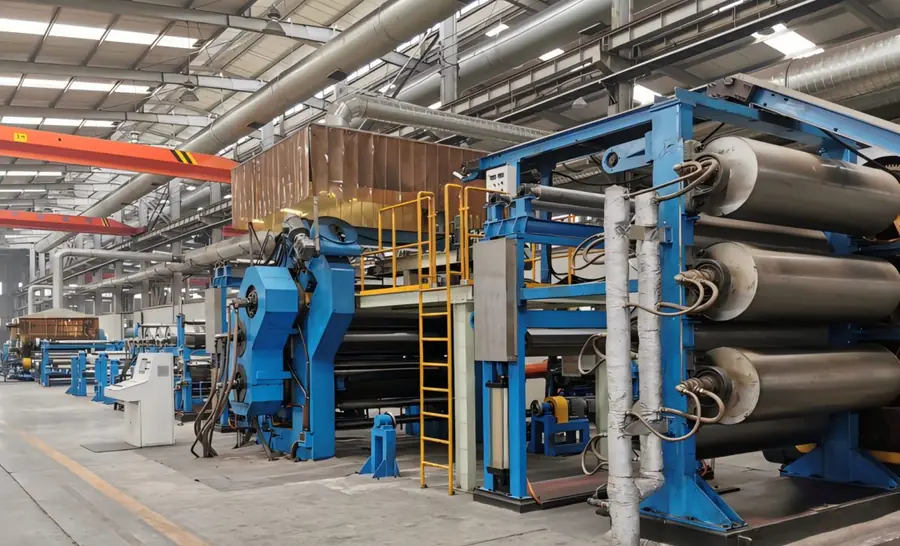
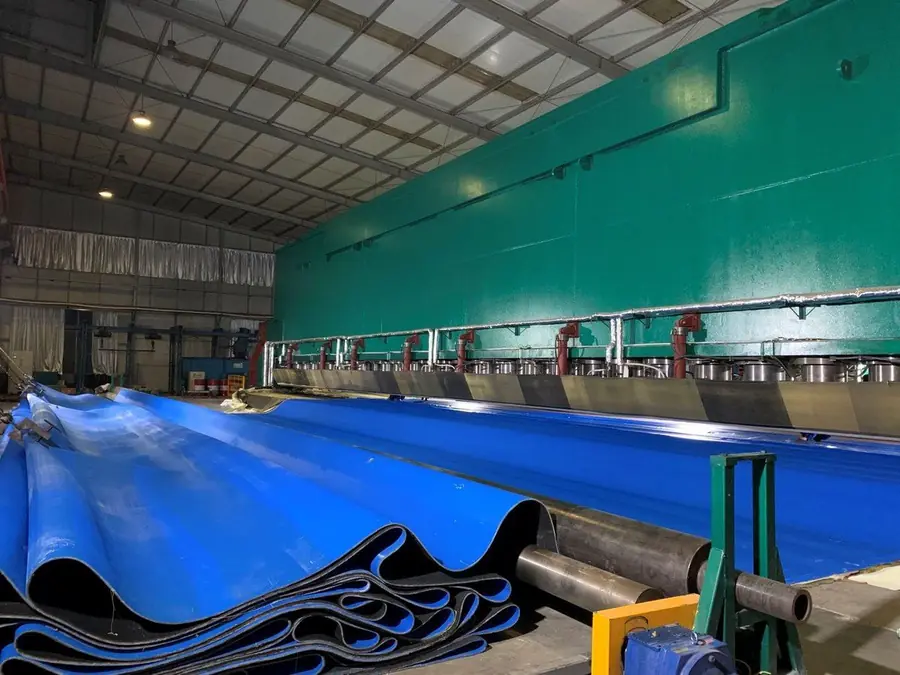
F = plies of dipped canvas, R = rubber layers. Model suffix -2 = 2F+3R, suffix -3 = 3F+4R. Our 32 m seamless vulcanizer fabricates bags up to 7.5 m high in a single piece without longitudinal seams; higher requirements are engineered case by case.
Reading the model number
The model code tells you the whole selection story. Take JBD4.0-280260-2: a 4.0 m bag built on canvas grade J2826, whose warp and weft strength are 280 and 260 N/5cm per ply — doubled by the two plies to the 560/520 N/5cm bag strength. Matching canvas to height is what the grade ladder does.
We send the canvas grade ladder and the matching model selection for your project with the quotation.
Why the step at 4.5 m is not incremental
Between 4.0 m and 4.5 m the bag strength jumps from 560/520 to 900/840 N/5cm — the biggest single step in the whole ladder. The reason is visible in the design parameters: the vertical pull force on the anchorage climbs from 60 t/m at 4.0 m to 75.9 t/m at 4.5 m, and reaches 117 t/m at 6.0 m. Two plies simply run out of margin, so the 3-ply structure takes over.
We send the strength curve for the standard series with the quotation.