
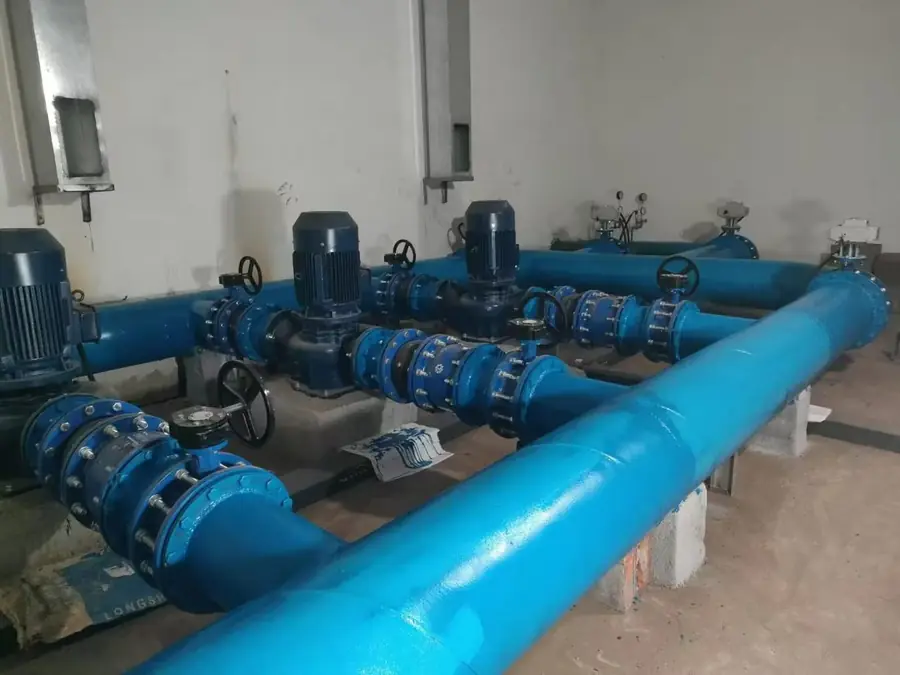
Every Baoli rubber dam can be delivered as a water-filled or an air-filled system. The bag, the anchorage and the hydraulic purpose are shared; what changes is the medium inside the bag, and with it the pump room, the control behaviour and the way the crest handles overflow. This article sets out the differences that actually move a design decision.
Same bag, different working medium
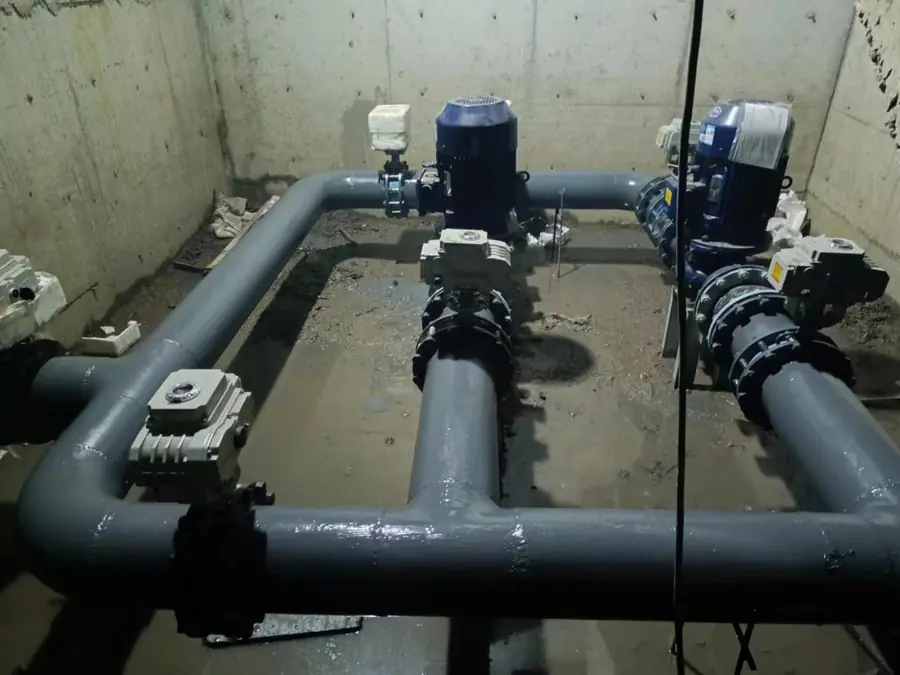
A water-filled bag is inflated by pumps drawing from the upstream pool, giving the bag weight and a firm, stable crest. An air-filled bag is inflated by blowers, making it much lighter per unit volume and faster to raise or lower — the air does the moving, not the water mass.
The two systems split the field rather than one beating the other. A water-filled bag is heavier, and its crest is steadier under overflow; an air-filled bag is lighter, faster to raise and cheaper to build. Water brings a wider base and more pump capacity; air brings quicker response and less plant. Everything around them — the bag, the anchoring and the control system — comes from the same family of parts.
The internal-pressure principle behind the water-filled design
For a water-filled bag, the design internal pressure is expressed as a ratio of heads: H₀/H₁, the inflation water head over the retaining height. The ratio is not constant — it is deliberately reduced as dams get taller, trading a softer internal pressure for a wider bag footprint and manageable anchorage forces.
We send the internal-pressure and anchorage-force figures for your height range with the quotation.
A high ratio at low dam heights keeps the crest taut and the cross-section compact. As height grows, the ratio falls to 1.15 — the anchorage already carries 117 t/m at 6.0 m, and the bag shape, not more pressure, provides the remaining stability.
Control is where both systems converge
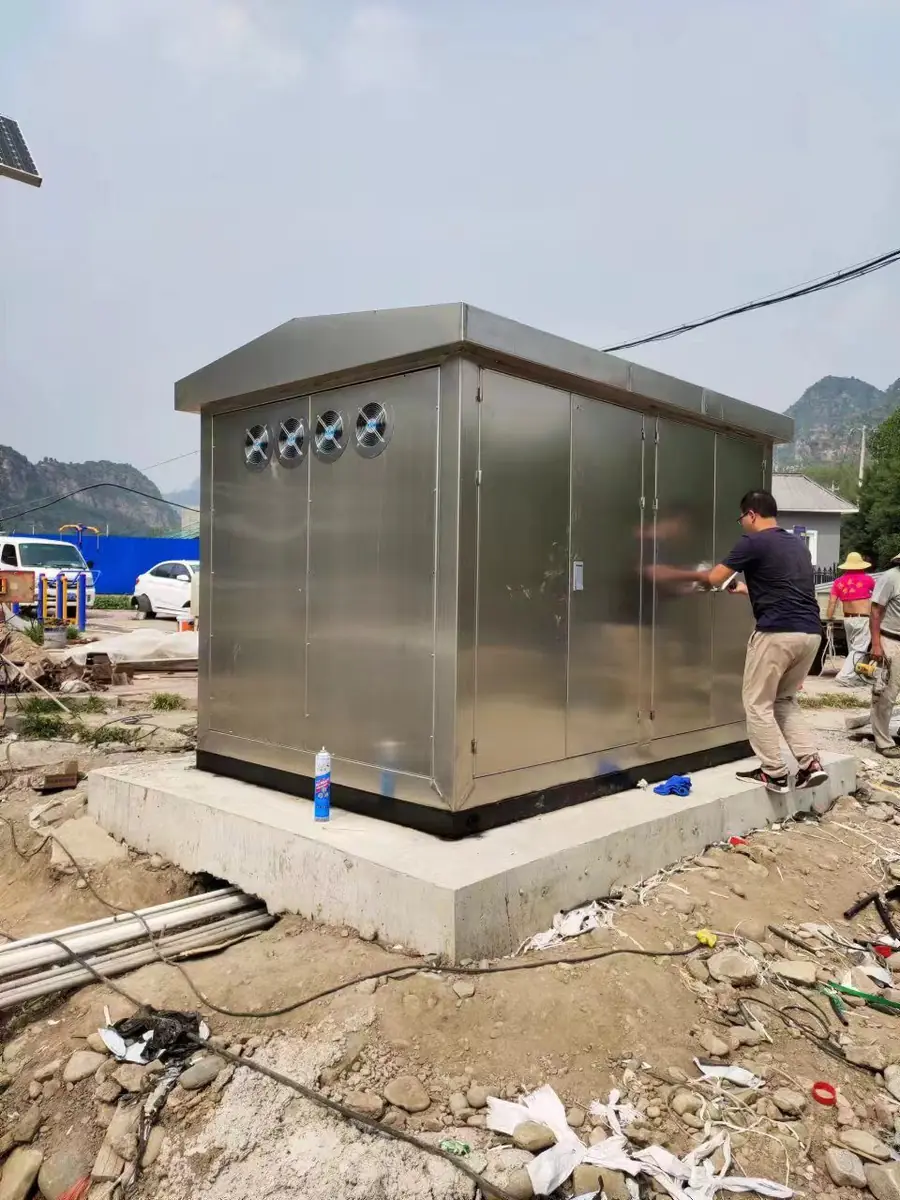
Whichever medium you choose, modern dams are run from an automated control cabinet or a SCADA station: set the crest level, and the pumps or blowers hold it — through inflow changes, flood release or scheduled deflation. Short charging and discharging times and simple operation were among the reasons the rubber dam was adopted for river regulation in the first place; the control layer is what turns that into one-person operation of a multi-kilometre reach.

How to choose in practice
- Irrigation, water storage, landscape weirs → water-filled is the default: a firm crest, proven full-overflow behaviour, and a pump room you usually need on site anyway.
- Frequent, fast regulation; automation-heavy reaches → air-filled earns its keep where response speed and low moving mass matter more than crest firmness.
- Cold-region rivers → both are used; air-filled avoids bulk water in the bag, while water-filled installations in cold regions rely on the same −30 °C-rated compound and standard freeze-management practice.
- Crest overflow as a feature (landscape weirs that look best spilling) → water-filled, whose mass damps crest vibration under spill.
One decision you don’t have to make alone
The medium is chosen together with the dam height, span and site power supply — and it can be revisited before the pump room is built. Send us the site conditions and we will return the recommended configuration with the hydraulic parameters for both options where both are viable.
Water or air for your river?
Tell us the retaining height, span and how often the dam will be operated. We will size both variants and show you where the cost and behaviour differences land.