
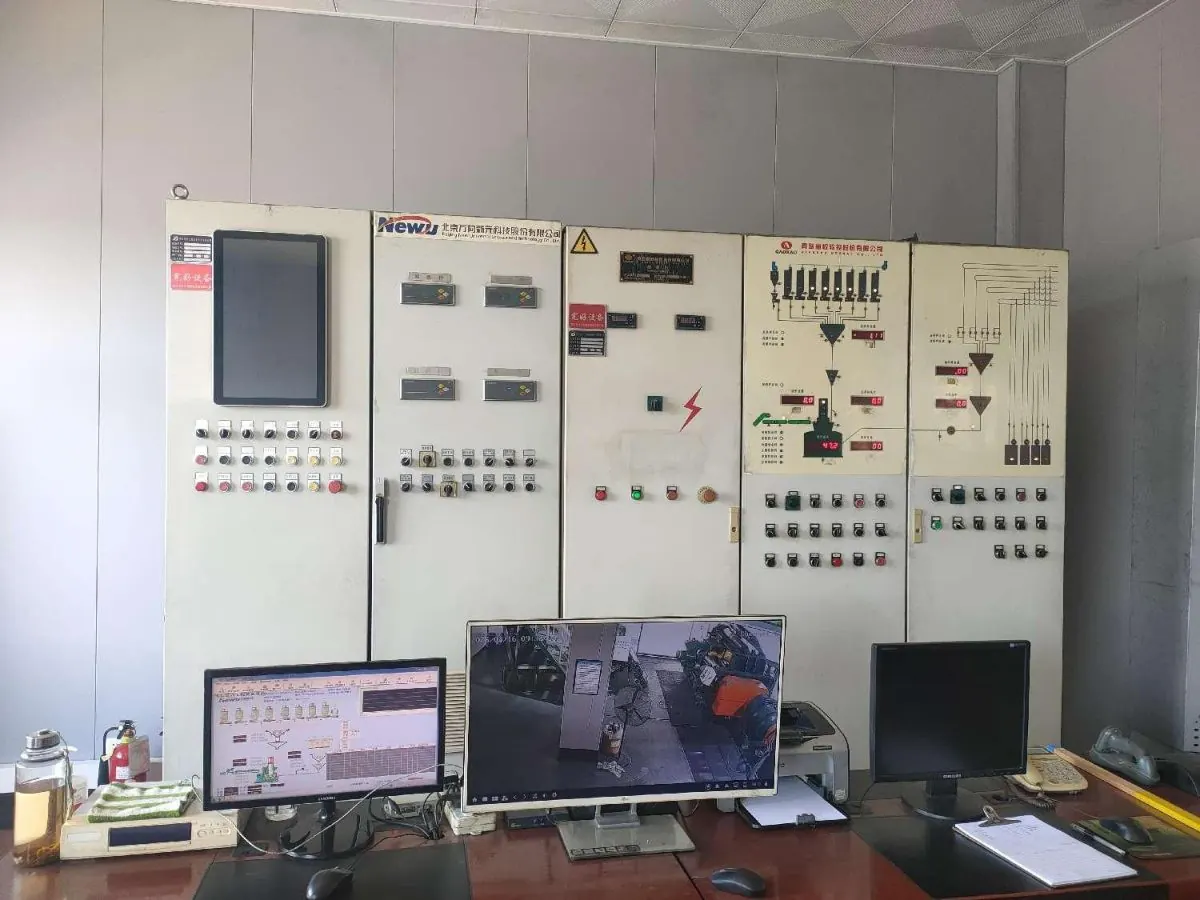
Ask two buyers what “automatic control” means and you get two different answers: one means a float switch that starts a pump, the other means a SCADA screen in a city office. The gap between them decides how the dam behaves at 2 a.m. during a flood. This article sets out the three levels of control we build, in the order a site usually moves through them — and the questions that tell you which one you actually need.
What the control system is controlling
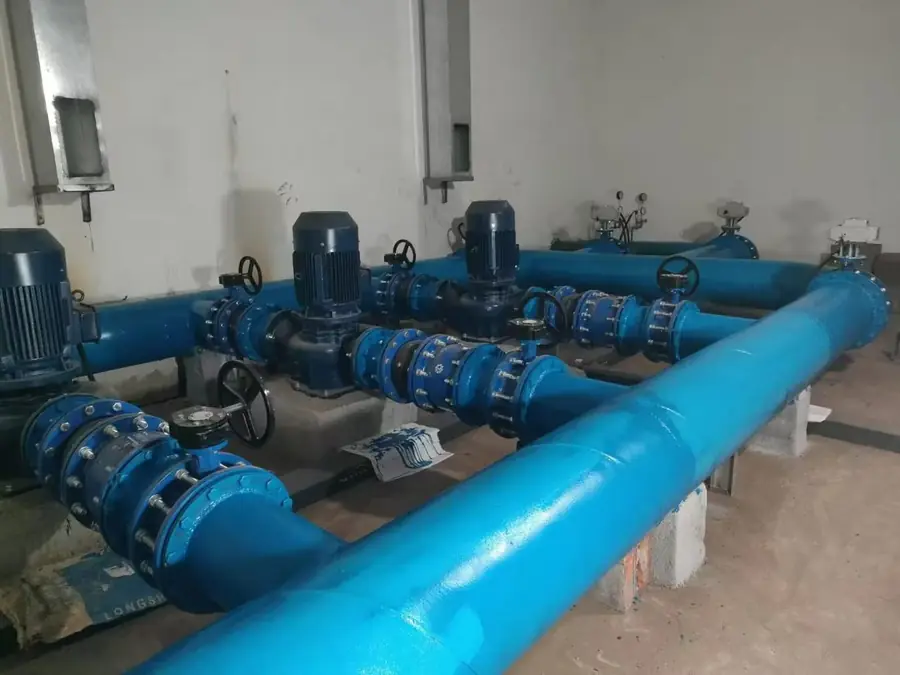
Before the levels make sense, it helps to separate the machinery from the logic. On a water-filled dam the hardware side is a filling and emptying system: a pump or blower pushing water (or air) into the bag through valves, and a discharge path back out when the dam is to be lowered. Our deflation design offers three discharge arrangements — bucket, float-type and electric — because the right one depends on whether the outlet can be reached, how fast the drawdown must be, and whether power is reliable at the site.
Alongside that sits the safety layer: emergency discharge through a pneumatic tank and a hydraulic siphon, which empties the bag without waiting for the normal pump sequence. In practice, that is what makes a power failure at a rubber dam an inconvenience rather than an incident.
The control system is the logic layer on top — deciding when to fill, when to vent, and who is allowed to command it. The rubber dam page shows how these components sit together on the sill; this article is about the logic.
Level 1: manual control at the cabinet
The baseline is a local control cabinet with push-buttons and a mimic of the system: raise, lower, stop. An operator stands in front of it, watches the water, and decides. Everything downstream — the pump, the valves, the discharge — is unchanged; only the decision stays human.
This level is not a budget compromise, it is a deliberate choice on some sites. It survives a dead network, a flat battery and a change of shift without a manual. It also puts a person physically at the dam, which on a small irrigation structure is exactly where you want the judgement anyway: the same operator who opens the gates can see the debris raft coming.
What manual control cannot do is react faster than a person can get there. If the site is unattended, or the flood peak arrives in under an hour, manual is a liability no matter how good the cabinet is.
Manual override is not optional at any level
Every automatic or remote system we build keeps automatic and manual operation modes side by side, and keeps the local cabinet authoritative. If the network drops, the site still runs. If the site is unmanned and something jams, the telemetry still tells you.
Level 2: automatic, sensor-linked control
Automatic control closes the loop between the water and the pump. The dam reads its own condition from interlinked pressure, laser height and water-level sensors, and raises or lowers on that reading rather than on a timetable. Upstream and downstream levels can both be monitored, which matters where the dam is holding a pool for abstraction but must not back water up into a tributary or a drainage outfall.
Two capabilities in this level do most of the practical work:
- Automatic raising and lowering — the dam holds a target level through the day and reacts to a rise without an operator walking to the cabinet.
- Manual venting for lowering on power failure — the bag can be collapsed by hand when the electrical supply is gone. This is the single most important line in any automatic scheme, and it is a mechanical provision, not a software one.
Three sensing principles rather than one is a deliberate design position, not redundancy for its own sake: a pressure reading tells you what the bag is doing, a laser height reading tells you what the crest is doing, and a water-level reading tells you what the river is doing. Disagreement between the three is itself information — usually the first sign that a sensor has drifted or a line is blocked.
Level 3: remote monitoring and command
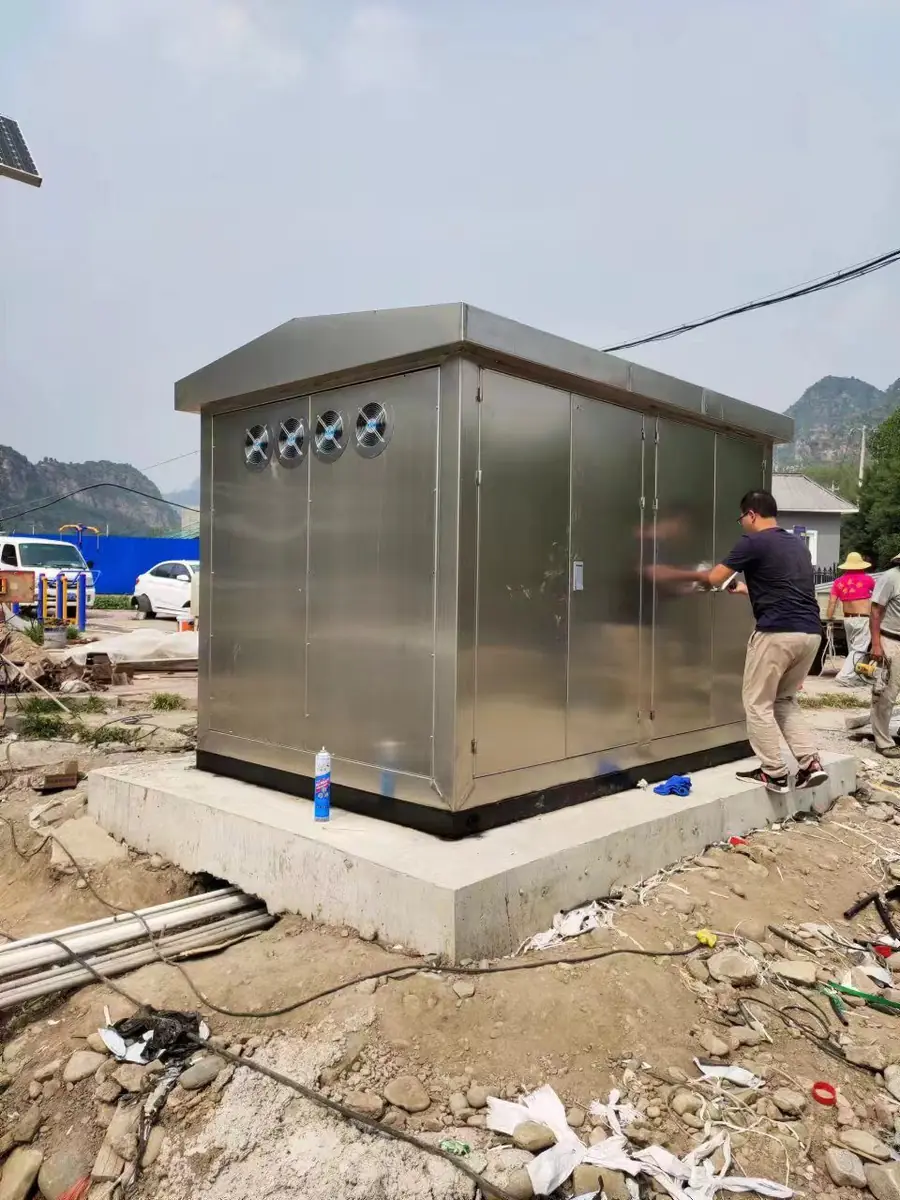
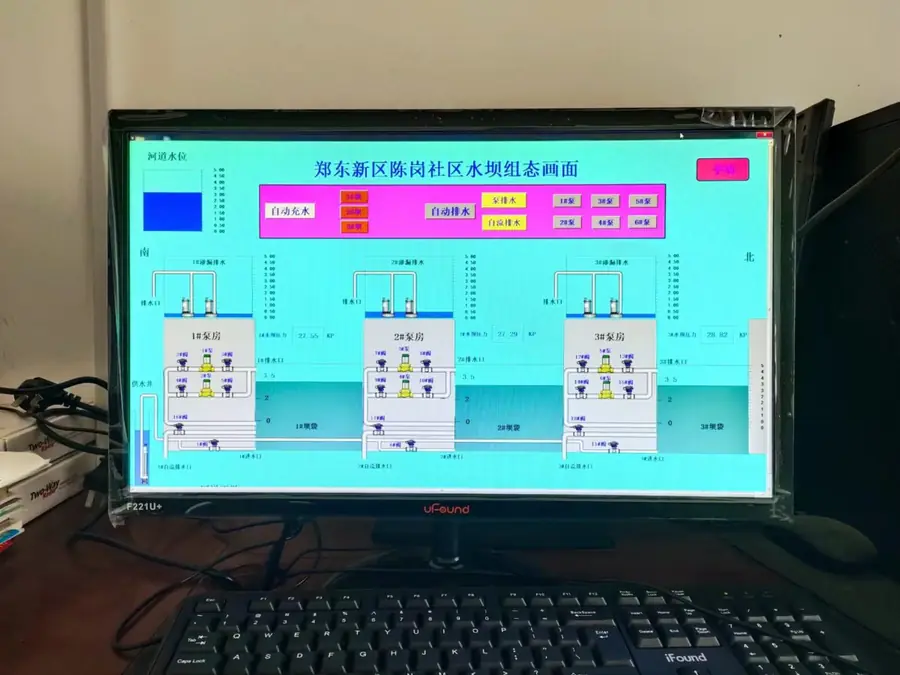
The third level moves the decision off site. On-site equipment can be commanded remotely, and the same channel carries status back: whether the bag is up or down, what the levels are, and what the last command was. Our remote monitoring and automatic inflation-deflation control system is our own development — it is covered by a software copyright in our portfolio, which is a polite way of saying we can change it when a client’s operating rules change, instead of waiting on a third-party vendor.
Where this earns its cost is rarely “convenience”. It is in the three situations that otherwise need a person on the road:
- A cascade of dams on one river. A single operator can coordinate a reach instead of driving between structures.
- A flashy catchment. A rainfall-flood early-warning link can be configured for the site, so the lowering command is triggered by the forecast rather than by the operator’s phone ringing.
- A site that is genuinely remote. Where the alternative is a two-hour drive, remote status is cheaper than the drive.
Note what remote control does not replace: the sensors, the discharge capacity and the manual provisions all still have to be right. Telemetry over a dam that cannot empty itself is a faster way to watch a problem.
The three levels side by side
| Question | Manual | Automatic | Remote |
|---|---|---|---|
| Who makes the decision | Operator at the cabinet | The control unit, on sensor readings | Operator off site, or the alarm logic |
| What triggers a lowering | Someone sees the water rise | Level, pressure or crest height threshold | Threshold, forecast or a command from the office |
| Needs a person on site | Yes, to act | No, to act — yes, to supervise | No |
| Needs a data link | No | No | Yes |
| Needs reliable mains power | Only for the pump | Only for the pump | For the pump and the link |
| Typical fit | Small irrigation or landscape structure with staff on site | Municipal river, water supply intake, unattended site | Multi-dam cascade, flashy catchment, dispersed operations |
| Failure mode to design out | Nobody is there when it rises | A sensor drifts and the dam believes it | The link is down exactly when it is needed |
Read the last row first. Each level trades one failure mode for another. The right answer is the level whose failure mode your organisation can actually cover — not the highest level in the brochure.
How to specify it in a tender
Control is usually written into a specification as a single line: “automatic control system”. That line is where projects go wrong, because it leaves three things open. Close them before the quotation stage:
- Authority. Which level wins when the local cabinet and the remote command disagree? Write it down. We default to local, and say so in the drawings.
- Fallback. What lowers the dam with no power and no network? On our systems the answer is manual venting plus emergency discharge — and it should be demonstrated at commissioning, not assumed.
- Observation. What is actually measured, and how often? A level reading every few minutes is enough for a river; it is not enough to protect a pump station from a surge.
The selection guide walks the same decisions from the top — duty, medium, height class, anchorage, control — if you are still at the stage of defining what the dam is for. Once the dam is running, the operating rules in the O&M guide are what keep the control system honest.
The short answer
Manual if a trained operator is on site whenever the river can rise. Automatic if the site is unattended and the water level has to be held without anyone present — this is the level most municipal and water-supply schemes land on. Remote if you are running more than one structure, or the catchment gives you less warning than a drive takes. Every level keeps a manual override, and every level needs the bag to be able to empty itself.
Tell us how the site is staffed — we will size the control level
Send the river width, the retention height, whether the site is manned, and whether power and a network reach the bank. We will come back with the control arrangement that fits, drawn into the same package as the bag and the anchorage.