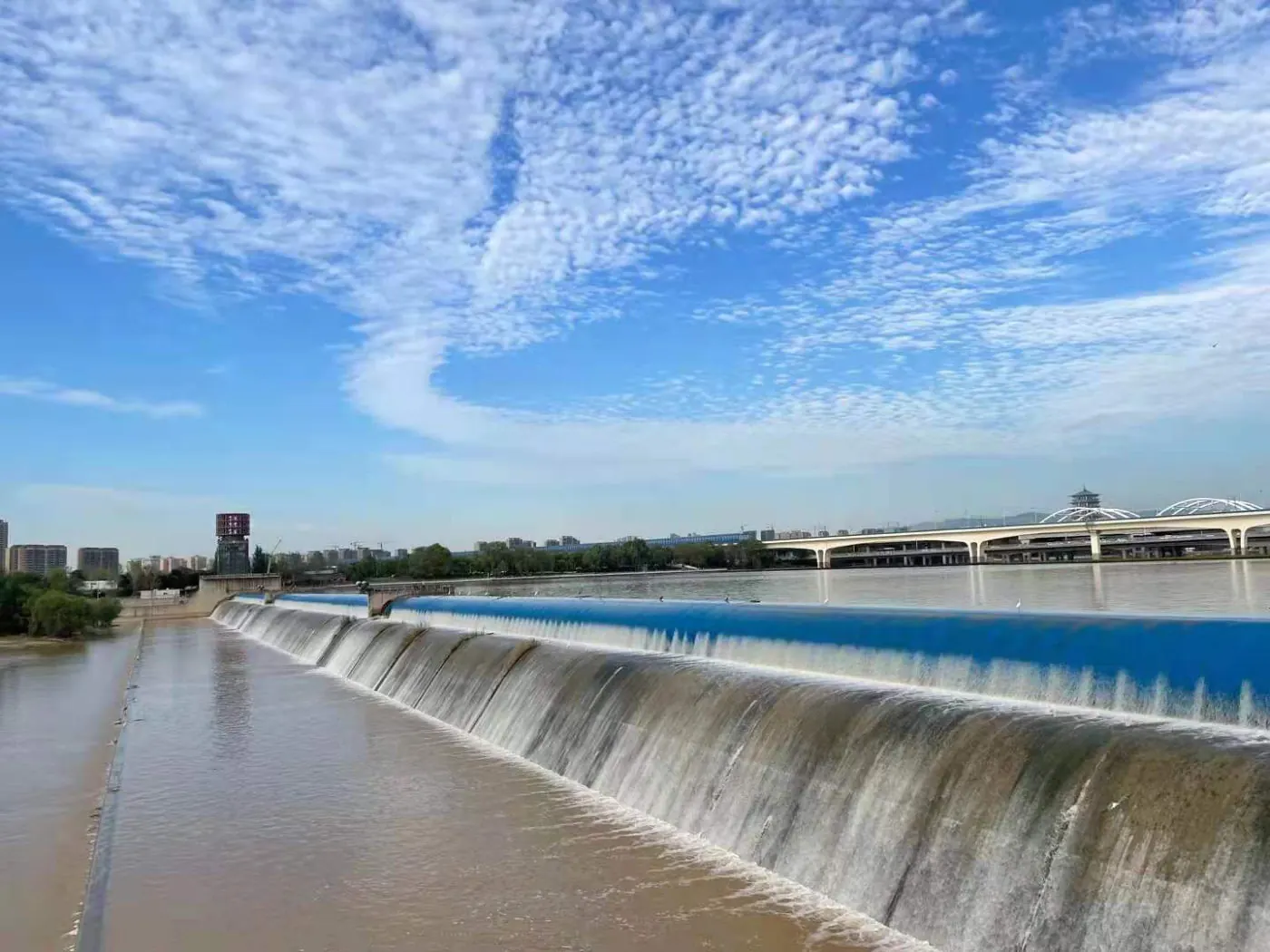
3 m water-retaining height · 890 m total length · Northwest China
| Project name | Ba River |
|---|---|
| Project location | Ba River, Xi'an, Shaanxi, China |
| Region | Northwest China |
| Dam type | Rubber dam — fabric-reinforced inflatable dam bag |
| Dam design | Baoli (in-house design & manufacture) |
| Water-retaining height | 3 m |
| Spans / openings | 8 |
| Max single span | 130 m |
| Total length | 890 m |
| Application | Ecological water storage · Flood regulation · Urban landscape |
| Dam bag series | JBD series, 0.5–6 m height range |
| Drawings & test reports | Available on request |
Maximum single span reaches 130 m in this urban river project. A multi-purpose design for ecological water storage and flood regulation that creates spectacular waterfront scenery for the Xi'an urban area — a famous demonstration case of city-landscape rubber dams in China.
Water-retaining height
Total dam length
Spans / openings
Project region
The Ba River drains loess-soil catchments before it reaches the Xi'an urban plain, so it carries a heavy sediment load in the wet season and runs low in the dry months — an 890 m retaining line must work across both states without choking the channel.
The dam was built as a series of modular bays along the full 890 m axis. Each bay inflates and deflates independently, so operators can hold a continuous landscape water level in normal weather, then drop selected bays to flush sediment past the line and pass flood peaks near the natural channel capacity. Spreading the structure over many bays also keeps any single bag within transportable factory sections — longer field joints are avoided, and every bag section is vulcanised under factory control before it leaves the workshop.
Anchoring on a line this long starts at the centre of the floor slab and works outward in both directions, so the bag is never stretched into place from one end. At each side wall the fabric is hung and tensioned, then anchored upward from the bottom, which keeps the seal line straight where the slab meets the bank. The rule behind all of it is even distribution: any error left in one bay shows up as a wrinkle somewhere else, and a wrinkle is where a bag first wears.
In service the dam is usually held just below its full head, so a thin sheet of water passes over the crest. That overflow is deliberate. It keeps the bag wet and cool, which slows the ageing of the rubber, and it gives the city the moving water surface the reach was designed for. Operators watch the overflowing sheet, because a pulsing crest is the first sign of an unfavourable combination of head and tailwater; lowering the bag slightly restores steady flow.
This reference project used our rubber dam system — fabric-reinforced dam bag with bolt or wedge anchoring, water-filled or air-filled operation.
Considering an air shield dam instead? Compare the two systems before you specify.
We can share detailed drawings, material test reports and owner contacts for projects comparable to yours.
Tell us your river width, required water-retaining height and site conditions — we will send comparable project records and a preliminary configuration.