2.5 m water-retaining height · 210 m total length · Northeast China
| Project name | Dandong |
|---|---|
| Project location | Dandong, Liaoning, China |
| Region | Northeast China |
| Dam type | Rubber dam — fabric-reinforced inflatable dam bag |
| Dam design | Baoli (in-house design & manufacture) |
| Water-retaining height | 2.5 m |
| Spans / openings | On request |
| Max single span | On request |
| Total length | 210 m |
| Application | River improvement · Flood prevention · Waterscape upgrade |
| Dam bag series | JBD series, 0.5–6 m height range |
| Drawings & test reports | Available on request |
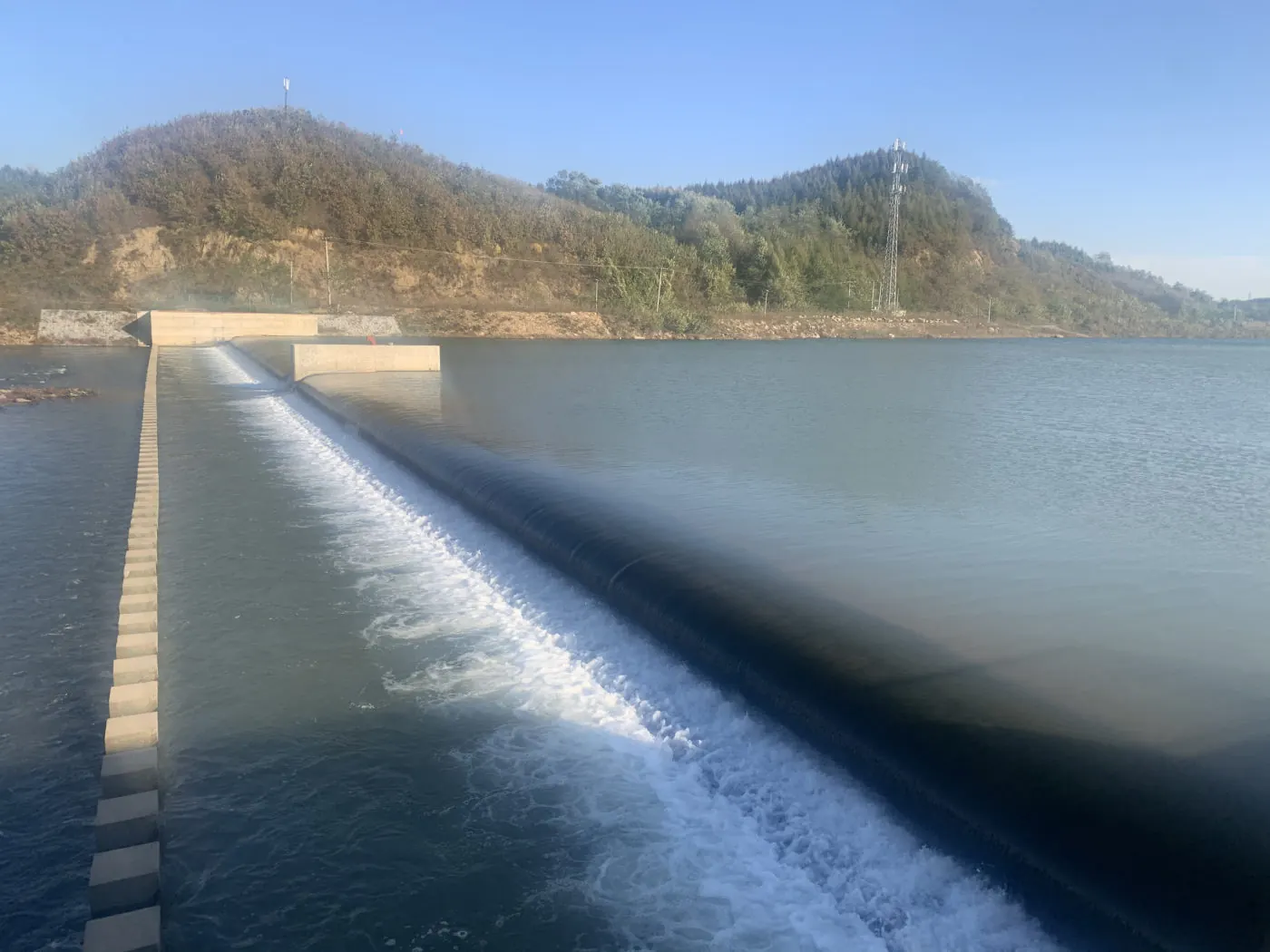
A northern-region rubber dam for river improvement and flood prevention. Features water storage, ecological restoration and waterscape upgrade, with modular bays allowing independent inflation and deflation for flexible water-level control — a major local water-conservancy project in Liaoning.
Water-retaining height
Total dam length
Spans / openings
Project region
Dandong sits where mountain catchments meet the sea, and it takes some of the heaviest rainfall in northern China — summer typhoon remnants can raise river levels within hours, leaving little time for gate-by-gate operation.
A rubber dam answers with speed and total opening. Fully deflated, the bag lies flat on the sill and returns the river almost to its natural section, so a sudden peak passes without the backwater a fixed crest would create. Reinflation after the event is a matter of hours, not days, which matters for a city that wants its waterfront back quickly after each flood. The 2.5 m retaining height was also a deliberate balance: high enough for the landscape and water-supply pool, low enough that even partial deflation leaves ample discharge capacity for the channel.
Before the bag arrives, the underlay sheet is laid to the centre line and anchor line marked on the slab, then temporarily fixed into the anchor groove and up the side walls. Outlets are cut on site to the positions actually found there, and the sheet is reinforced around every opening so the water cap has a sound seat. The sealing strip is bonded to the underlay rather than left loose, because a strip that shifts during installation leaves a path for leakage under the clamp line.
Commissioning is staged rather than done in one fill. The bag is raised in steps, with the anchor line inspected at each step, held at an intermediate height long enough for the crew to watch the seals, then taken higher and held again. Only after a full-height hold with no fall in level or pressure is the dam accepted and the clamps re-torqued. That sequence is what turns a finished installation into a verified one.
This reference project used our rubber dam system — fabric-reinforced dam bag with bolt or wedge anchoring, water-filled or air-filled operation.
Considering an air shield dam instead? Compare the two systems before you specify.
We can share detailed drawings, material test reports and owner contacts for projects comparable to yours.
Tell us your river width, required water-retaining height and site conditions — we will send comparable project records and a preliminary configuration.