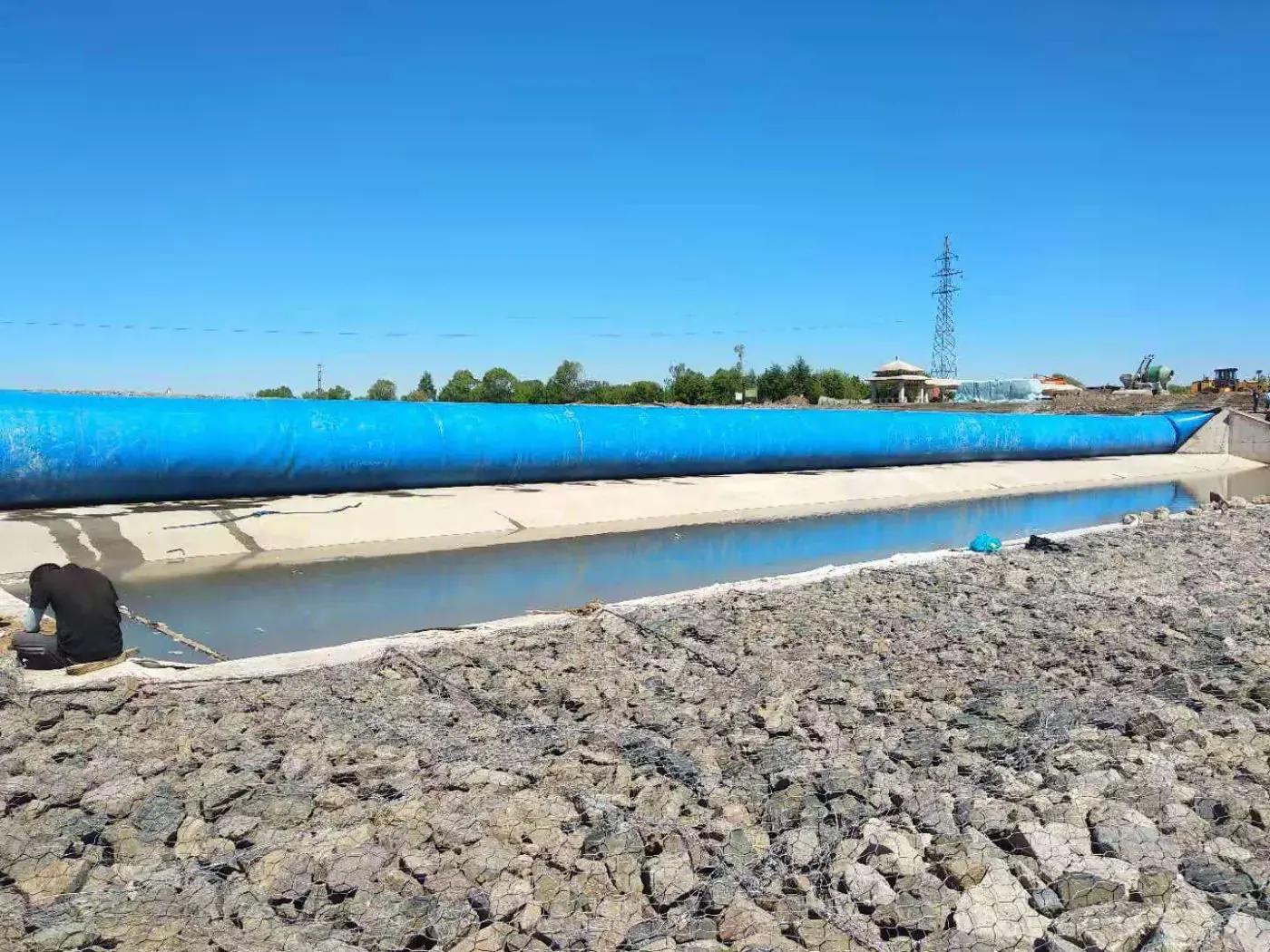
2.1 m water-retaining height · 63 m total length · Northeast China
| Project name | Heihe |
|---|---|
| Project location | Heihe, Heilongjiang, China |
| Region | Northeast China |
| Dam type | Rubber dam — fabric-reinforced inflatable dam bag |
| Dam design | Baoli (in-house design & manufacture) |
| Water-retaining height | 2.1 m |
| Spans / openings | On request |
| Max single span | On request |
| Total length | 63 m |
| Application | Cold-climate flood safety · Waterfront ecology · Urban landscape |
| Dam bag series | JBD series, 0.5–6 m height range |
| Drawings & test reports | Available on request |
A cold-climate rubber dam for northern river regulation and flood safety. Provides water storage, waterfront ecology and urban landscape improvement, with modular bays allowing independent inflation and deflation — a typical frigid-zone water-conservancy project in Northeast China.
Water-retaining height
Total dam length
Spans / openings
Project region
Heihe faces the Amur at the northern edge of Chinese habitation. Winter air temperatures sit far below freezing for months, the river freezes solid, and every spring the ice sheet breaks up into a run of moving floes that grinds everything in the channel.
The operating rule here is seasonal: the dam is deflated before freeze-up and lies flat under the ice all winter, so the spring ice run passes over the collapsed bag instead of ramming an inflated crest. The 2.1 m height keeps the bag light and quick to fill when the river reopens. Cold-climate compounds and a fabric build matched to the height class keep the bag flexible through the freeze-thaw cycle, and the compact 63 m line keeps pre-winter deflation a short, routine operation for the local crew.
Hardware ages faster than fabric in a northern climate. Anchor bolts, clamp plates and the exposed steel of the inlet and outlet works are inspected before and after each winter, cleaned back to sound metal and re-coated, and any bolt found loose is re-torqued to its setting. Concrete wedges are checked for splitting and frost damage. None of this is complicated work, but it is the difference between a bag held evenly along the whole line and one held only at the points that happened to be looked after.
Winter operation follows one rule: the bag does not carry water while it is frozen in. Before freeze-up the bag and the pipes are drained, the bag is left lying flat, and the ice that forms over it protects the rubber from wind, sunlight and abrasion through the cold months. Where a dam has to hold water over winter, the ice is broken and cleared in a band along the upstream face so that expanding ice does not load the bag. Height is not adjusted while ice is present; the bag is left as it froze until the ice has gone.
This reference project used our rubber dam system — fabric-reinforced dam bag with bolt or wedge anchoring, water-filled or air-filled operation.
Considering an air shield dam instead? Compare the two systems before you specify.
We can share detailed drawings, material test reports and owner contacts for projects comparable to yours.
Tell us your river width, required water-retaining height and site conditions — we will send comparable project records and a preliminary configuration.