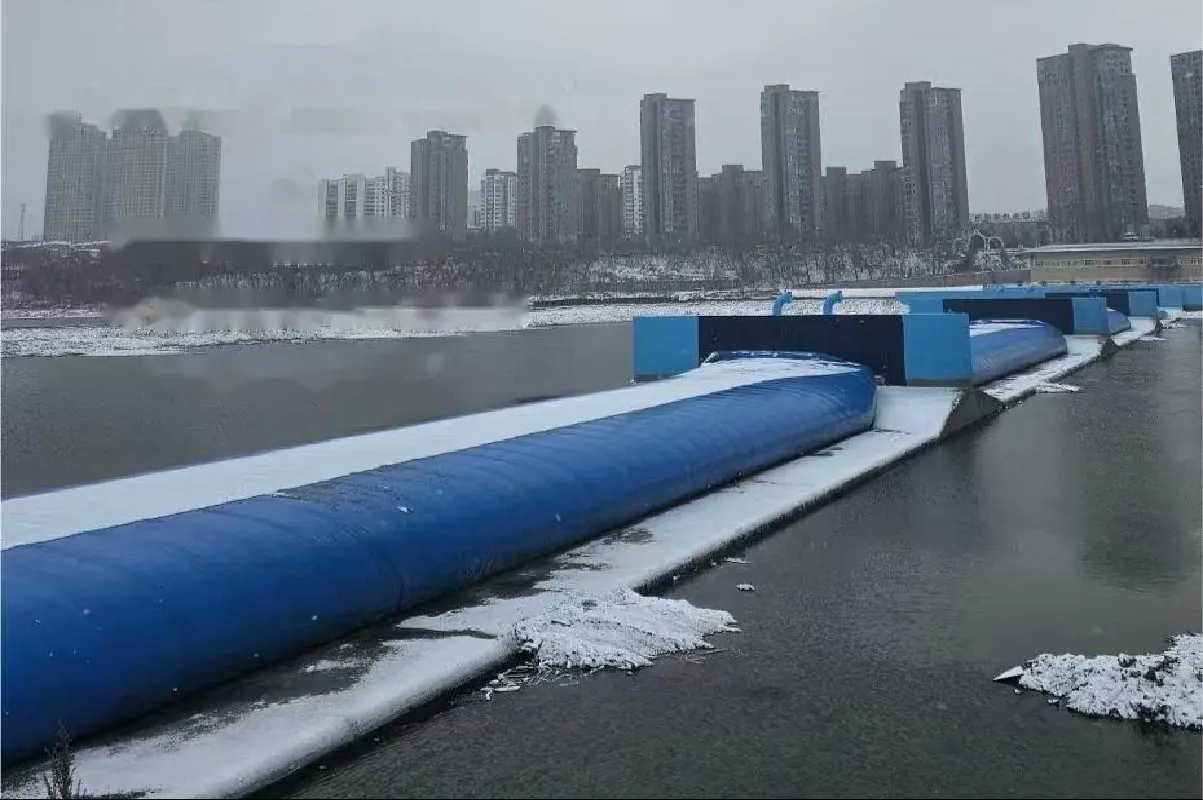
5 m water-retaining height · 260 m total length · Northeast China
| Project name | Songhua River |
|---|---|
| Project location | Songhua River, Jilin, China |
| Region | Northeast China |
| Dam type | Rubber dam — fabric-reinforced inflatable dam bag |
| Dam design | Baoli (in-house design & manufacture) |
| Water-retaining height | 5 m |
| Spans / openings | On request |
| Max single span | On request |
| Total length | 260 m |
| Application | Flood control · Water regulation · Urban ecological landscape |
| Dam bag series | JBD series, 0.5–6 m height range |
| Drawings & test reports | Available on request |
A high-height rubber dam specially built for a severe cold northern climate. Operates stably under freezing winter and ice-covered river conditions, delivering flood control, water regulation and urban ecological landscape — a valuable benchmark for cold-region applications.
Water-retaining height
Total dam length
Spans / openings
Project region
The Songhua is a continental-scale river: wide, powerful in flood, and ice-covered for a large part of the year. Any dam in its channel must pass enormous flows without raising upstream levels, and survive both the spring ice run and year-round sediment movement.
The 5 m bag at this site is in the upper reaches of the JBD height range, using the heavy fabric build matched to its 5 m class and anchor plates sized to the same class so the clamp line holds at full head. In flood the entire 260 m line deflates — on a river this size, anything less than total opening would push backwater into upstream cities. The dam then reinflates to re-form the regulation pool that the city's waterfront and intakes depend on. Ice is handled the northern way: deflated flat before freeze-up, and the bag spends the winter protected under the ice sheet.
On a bag of this height the clamp line carries the full head, so the plate run is treated as a machined joint rather than a cover strip. Plates are aligned end to end and packed with rubber where the slab is not true; the bolts are tightened in passes rather than in one move, and the whole line is re-torqued after the bag has been filled and has taken its shape. Where the fabric is rolled around a core at a joint, that core is set so its seam does not sit under a plate joint.
Summer is when the bag works hardest, with a shallow sheet passing over the crest for weeks at a time. That overflow protects the rubber from sun and keeps it cool, but a pulsing crest is a warning: it means the combination of head, overflow depth and tailwater has put the bag into vibration, and vibration is what wears a bag out. Operators watch the crest, and if the pulsing grows they open the outlet and drop the bag until the flow steadies again.
This reference project used our rubber dam system — fabric-reinforced dam bag with bolt or wedge anchoring, water-filled or air-filled operation.
Considering an air shield dam instead? Compare the two systems before you specify.
We can share detailed drawings, material test reports and owner contacts for projects comparable to yours.
Tell us your river width, required water-retaining height and site conditions — we will send comparable project records and a preliminary configuration.